← Lawn Sprinkler System Contractor
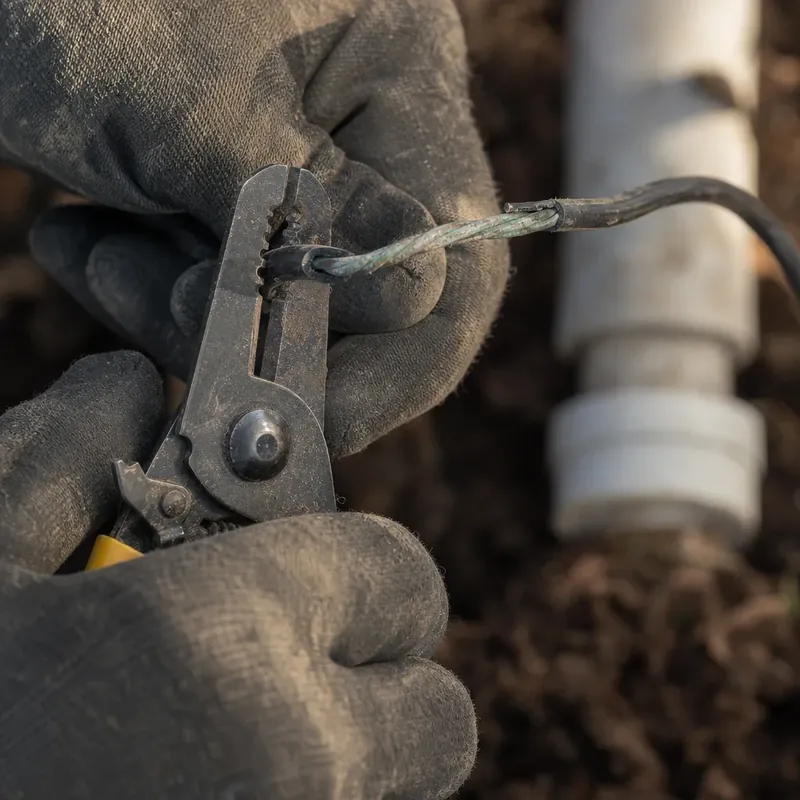
A zone that won't turn on even though the valve checks out often means a broken wire somewhere underground, and guessing where wastes time and money. We trace the wire to find the break without digging up the whole yard, repair it, and test the zone. We keep the appointment, explain it in plain English, and back repairs with a 30-day limited warranty. Licensed (SCC131152818), family-owned since 1994, and rated 4.9 stars from 180+ Google reviews. Serving Ormond Beach, Daytona Beach, Port Orange, Flagler Beach, Palm Coast and the towns in between.
A zone that won't turn on at all is a different problem from a zone that runs weak. When the valve works by hand but won't respond to the controller, or when trouble began after digging or a storm, a broken or damaged wire is a strong suspect. Sprinkler System Wire Break Locating & Repair starts with reading that pattern before anyone picks up a shovel.
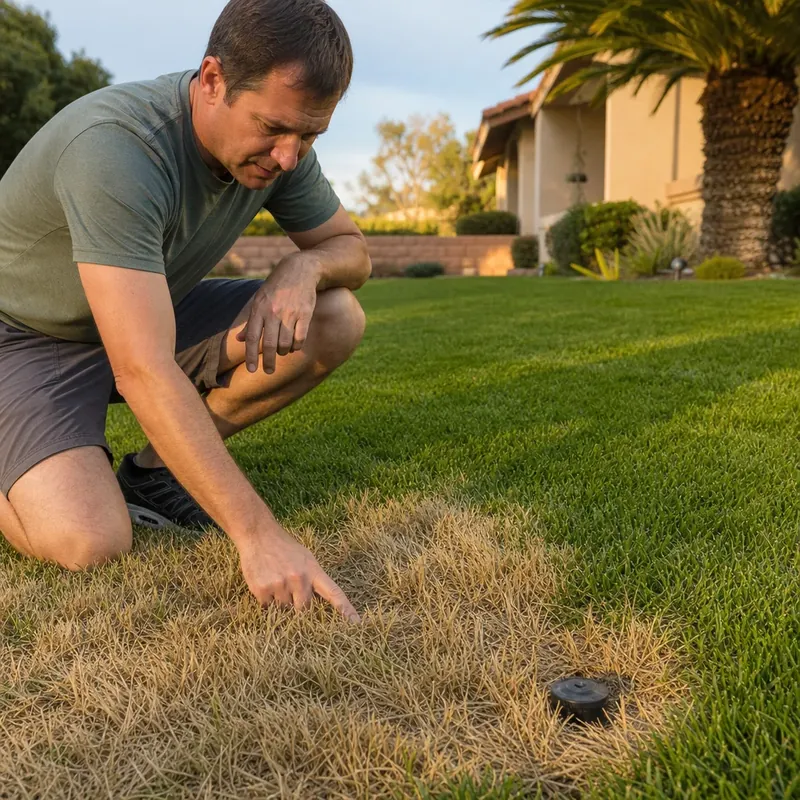
First, let's sort out what kind of "dead" you're looking at. If the heads pop up but spray weak or uneven, that's usually a water problem like low pressure, a leak, or a clogged head. A wire problem looks different. The zone just doesn't come on at all, even though the controller says it's running. No hiss, no pop-up, nothing.
Here are the signs that point us toward the wire:
Around Ormond Beach, two local things make wire trouble more likely. Our summer storms bring a lot of lightning, and a nearby strike can damage wires, solenoids, or the controller itself. If a zone quit the week after a big storm, mention it. Our sandy soil also shifts and settles more than heavier dirt does. That movement, plus growing roots, can pull on splices and stretch old wire until it gives.
Wire age matters too. Splices that weren't sealed with waterproof connectors tend to corrode underground. A system that's been in the ground a long time may have a few weak spots waiting to fail.
None of these signs prove a wire break by themselves. A stuck valve or a bad solenoid can look a lot like a cut wire. What these clues do is narrow things down. If you can tell us which zones are out, whether it comes and goes, and what's happened in the yard lately, finding the real problem goes faster. If more than one thing seems off across your system, our zone troubleshooting service looks at the whole picture.
Before you call anyone about a wire, spend ten minutes at your controller. Plenty of zones that look dead turn out to have a simple cause that has nothing to do with buried wire. If one of these checks fixes it, great. You just saved yourself a service call, and we'd rather you know that.
If you've already opened the valve by hand at the valve box, as described above, and water flowed, you've done the most useful test there is. That tells us the pipe and valve body are working and the trouble is somewhere in the signal path.
Some folks own a multimeter and like to check the wire themselves at the controller. That can help point to an open or shorted circuit. Just know that a reading tells you there's a problem somewhere along that run. It won't tell you where in the yard the break is. Finding that spot without digging up half the lawn takes a wire locator and some practice.
Here's when it's fine to wait. If the dead zone waters a bed you're about to redo, or it's the rainy season and your lawn is getting plenty of water anyway, there's no rush. A broken wire doesn't waste water. The valve just stays closed. Fix it when it fits your schedule.
It's time to call when the controller has power, the program looks right, the terminals are tight, and the zone still won't come on. It's also time if several zones failed together or a zone quit right after digging or a lightning storm. At that point the problem is almost always underground, and the checks you just ran will help the repair go faster.

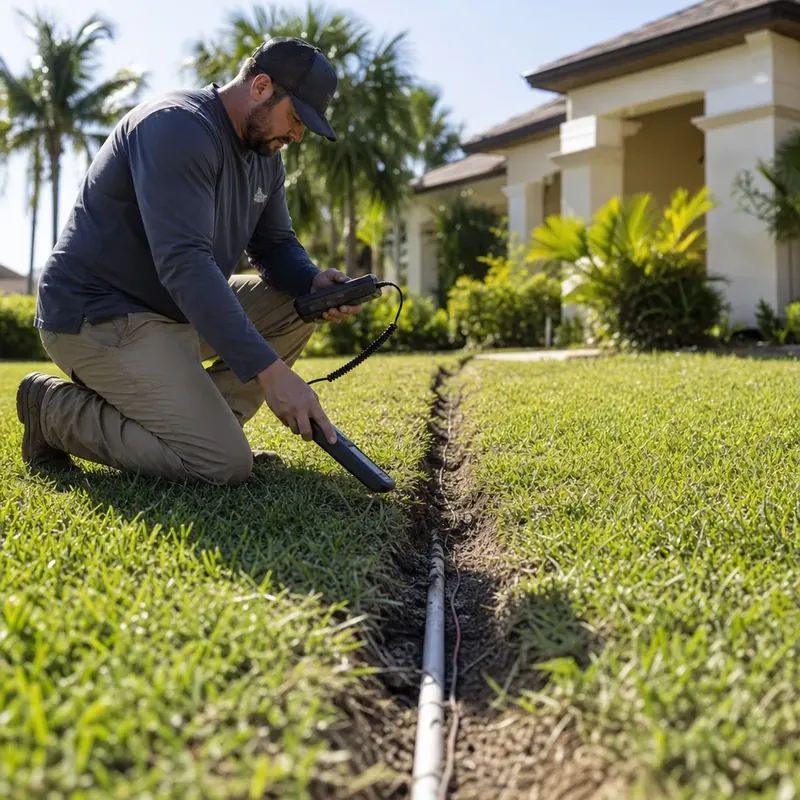
Here's the short answer. A wire locator sends a signal down the bad zone wire from the controller. A handheld receiver then follows that signal across your yard. Where the signal stops or changes, that's your break. The fix is usually one small hole, not a trench across the lawn.
That matters because you can't always guess where a wire runs. It often follows the water pipe, but not always. Some installers cut across a flower bed or under a walkway to save time. Without a locator, the only way to find the break is to dig along the whole path and hope.
Here's how the process usually goes:
Our sandy Ormond Beach soil adds one wrinkle. Sand drains fast, and dry sand doesn't carry current well. A ground fault finder needs some moisture in the soil to get a clear reading. So the area may need to be damp before a nick will show up. This is also why a damaged wire can work fine during a dry spell and quit after a summer storm.
Locating isn't magic, and it's fair for you to know where it struggles:
In some of those cases, running a new wire from the controller to the valve is simpler than chasing one break after another. That's often true on an older system, where fixing one spot just leads to the next. An honest tech should tell you which choice makes more sense for your yard and why.
We'll explain what we find in plain words, so you know where the break is, what caused it and what fixing it involves. No surprises, and no guessing with a shovel.

Wire trouble here usually isn't bad luck. Living near the coast in Florida puts extra wear on the thin, low-voltage wire that tells your valves when to open. We already covered lightning and shifting sand. Here are the other local factors, and why they matter when a zone goes quiet.
None of this means your system is doomed. It just means a few simple habits go a long way here.
If you're new to Florida, this can feel like a lot. It isn't. Most of it comes down to knowing where your wire runs and keeping the connections dry and sealed. If your system has been in the ground a long time near the coast and keeps losing zones, that's the situation where running new wire can make more sense than patching, as we mentioned above.
When we come out for a break, we'll look at the whole system and explain what we find, including any corroded splices or ant-filled boxes we spot along the way. That way you know what caused the break, not just where it was.
The honest answer is that it depends on what's underground, and nobody knows that until the wire is tested. A single clean cut near the surface is a small job. Several nicks along an old wire buried under a walkway is a much bigger one. Most of the cost comes from time spent finding the problem, not the parts. Splice connectors and wire are cheap.
In this trade, wire repair is usually priced in one of a few ways. Some companies charge a service call or diagnostic fee and then bill locating time by the hour. Others quote a set price per repair once the break is found. Running new wire is often priced by how long the run is and how hard it is to get from the controller to the valve. None of these models is wrong. What matters is that you know which one you're getting before work starts.
Here's what tends to push the cost up or down:
We know how frustrating it is to get a quote, agree to it and then get a bigger bill. A few questions up front help you avoid that, no matter who you hire:
The checks you ran at the controller can lower the cost, too. If you can say which zones are out, whether it comes and goes, and what happened in the yard lately, less time goes to guessing.
You can try, but finding the exact spot without a wire locator usually means digging blind along the whole run. If you've already checked the controller power, rain sensor, schedule, and terminals, and the zone still won't come on, the break is likely underground. At that point a locator saves you from tearing up sod guessing where the wire runs, since it may not follow the pipe the way you'd expect.
No, a broken wire does not waste water or raise your bill. The valve simply stays closed because the signal never reaches it, so no extra water flows. That means if the dead zone is in a bed you're about to redo, or it's rainy season and your lawn is getting enough water anyway, you can fix it whenever it fits your schedule.
It depends on whether it's a clean cut or a nick, and how many breaks are on the wire. A single clean cut near the surface is a quick fix with one small hole. A nicked wire takes longer because the soil often needs to be damp before a ground fault finder can get a clear reading, and several nicks on an old wire under a walkway take much more time to trace.
A nicked wire can still carry current when the soil is dry, then fail once wet soil gets into the damage. This is especially common in Ormond Beach's sandy soil, which drains fast but still lets moisture reach a weak splice during a storm. If a zone acts up right after rain or heavy watering, that pattern points straight to a damaged wire rather than a valve problem.
Zones often share one common wire, sometimes called the ground wire. A break in that shared wire can knock out every zone that uses it at once. Digging, a nearby lightning strike or a corroded splice are common causes. If several zones quit together, note which ones and when it started, then call us so we can trace the wire.
The two can look alike. A solenoid is the small electric part on top of a valve that opens it. If the valve opens by hand at the valve box but not from the controller, the pipe and valve body are likely fine and the signal isn't getting through. A meter reading can show that something is wrong along a wire run, but it can't tell you where in the yard the break is. That takes a wire locator.
Yes. In Florida's sandy soil a shovel, sod cutter, power edger or post-hole digger can slice a wire without anyone feeling it, because wire is often buried only a few inches down. Tell your landscaper, fence crew or paver installer where your valve boxes and main lines run before they start digging. If a zone quit right after yard work, tell us.
Usually not. A wire locator sends a signal down the bad wire, and a handheld receiver follows it across the yard. Where the signal stops or changes, that's your break, and the fix is usually one small hole instead of a trench. Locating can be harder with more than one break on a wire, deep wire, or metal nearby, and we'll tell you if a new wire run makes more sense.
Call 386-610-2882 or send us a message. We reply within 48 business hours to schedule your visit.
We use cookies for website analytics and to show our map. You choose: nothing loads until you click Accept. See our Privacy Policy.