Sprinkler System Repair in Ormond Beach

Dead zones, geysers, soggy spots, or a water bill that suddenly jumped: a broken sprinkler wastes water every day. We keep the appointment, test every zone to find the real cause, explain it in plain English, and back every repair with a 30-day limited warranty. Licensed (SCC131152818), family-owned since 1994, and rated 4.9 stars from 180+ Google reviews. Serving Ormond Beach, Daytona Beach, Port Orange, Flagler Beach, Palm Coast and the towns in between.

Know Which Sprinkler Problem You Have

What you see in your yard is a clue, not a diagnosis. A dry patch, a soggy spot or a zone that won't turn on each point to a short list of likely causes for sprinkler system repair in Ormond Beach. Knowing that list helps you describe the problem clearly and spot a repair that only treats the symptom.
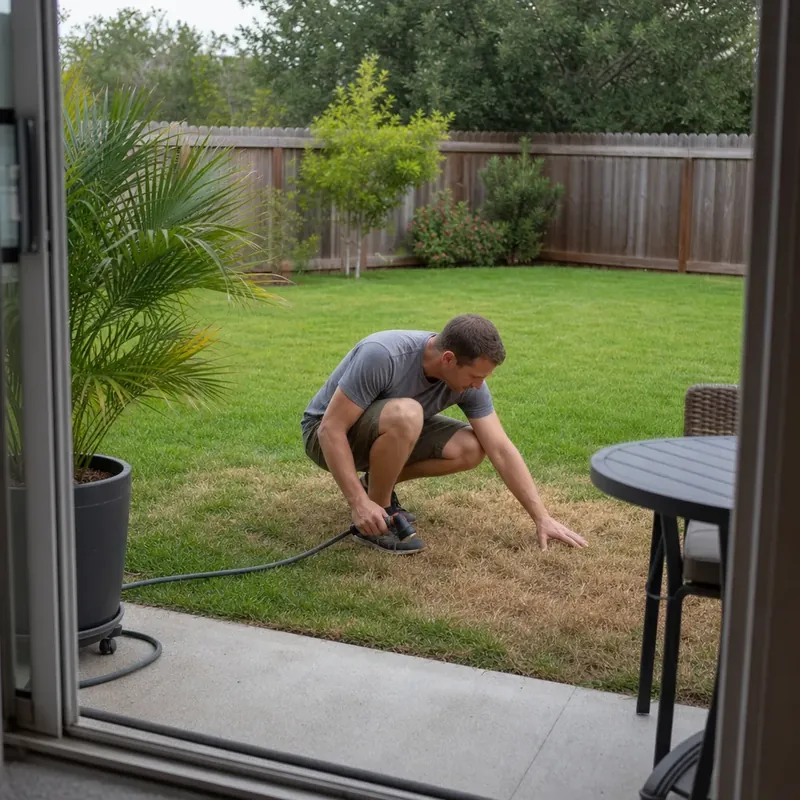
Dry brown patch on a lawn with a sprinkler problem in Ormond Beach

Most sprinkler trouble shows up in just a few ways. Here's what each one usually means, starting with what you'll notice.

  • One head won't pop up, sprays sideways or gushes water. This is often a broken or clogged head. Mowers, cars and foot traffic crack them all the time. It's one of the simpler fixes, and it's covered by our sprinkler head replacement service.
  • A spot stays soggy, water bubbles up or your water bill jumps. That points to a leak in a pipe or fitting underground. Our sandy soil can drain water away fast, so a leak doesn't always leave a puddle. Sometimes you'll only see a sunken spot or one patch that's greener than the rest.
  • A whole zone won't come on, but the others work. When one section stays quiet, the cause is usually that zone's valve, the solenoid that opens it, or a broken wire running to it.
  • A zone won't shut off. A valve stuck open is the usual cause. Often it's a bit of sand or debris caught inside, or a worn part that no longer seals.
  • Nothing runs at all. Check the simple things first: power to the controller, the schedule and whether a rain sensor has paused watering. If your system runs on a pump, the pump may be the problem. After a summer storm, a power surge can also knock out a controller.
  • Weak spray across several zones. Low pressure can come from a hidden leak, a partly closed valve, a pump that's wearing out or too many heads on one line.
  • Dry or brown patches while the heads seem fine. Heads may be aimed wrong, blocked by grass or shrubs, or have clogged nozzles. The zone may also not run long enough for fast-draining sandy soil.

Here's the catch. Many of these share causes. A brown patch can be a coverage problem or a slow leak that's stealing pressure from that zone. A dead zone can be a bad valve or a cut wire several feet away. If someone swaps the part you can see without checking why it failed, you may be calling again a few weeks later.

That's why we look at the whole system, not just the spot you pointed to. We run each zone, watch the heads, check the controller and follow the problem back to where it starts. Then we explain what we found in plain words, so you know what's broken and why.

If you're new to your home or new to Florida, you don't need to know any of this before you call. Just tell us what you're seeing. It helps to note which zone is acting up, when it started and whether your water bill has changed. Those small details point us in the right direction faster.
Decide If This Is a DIY Fix or a Licensed Repair

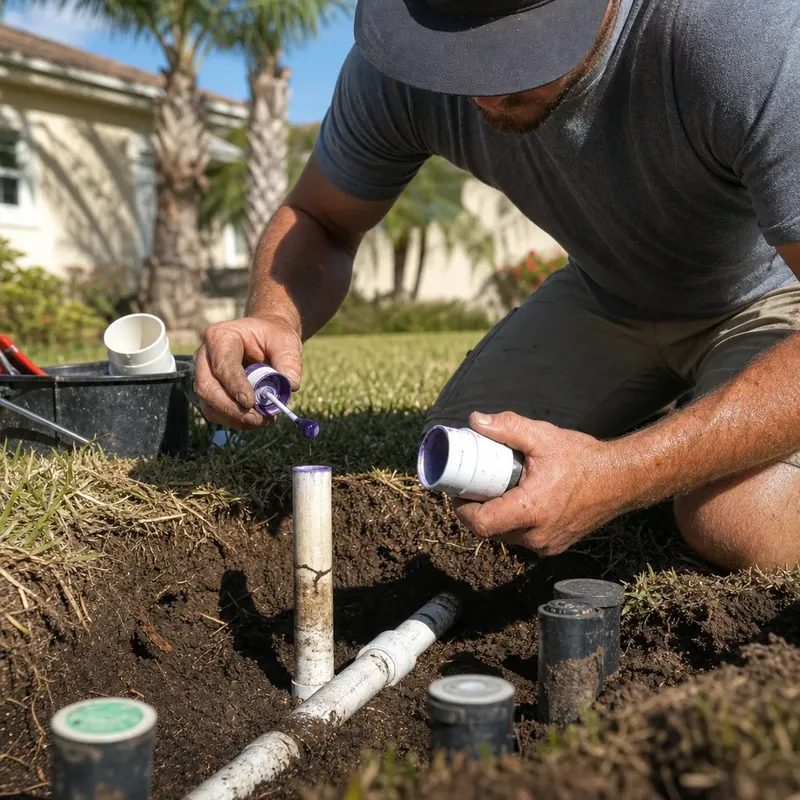
PVC sprinkler pipe being repaired in a trench

Not every sprinkler problem needs a service call. Some fixes take ten minutes and no tools. Others mean digging, cutting pipe or working with wires and water lines that feed your whole yard. Here's the honest line between the two.

You can likely handle these yourself:

  • Grass or shrubs blocking a head. Trim back the growth so the spray can reach the lawn.
  • A head that's aimed at the driveway or the side of the house. Many heads can be turned by hand to point back at the grass.
  • A clogged nozzle. Sand and grit get into nozzles, and you can often unscrew one, rinse it and put it back.
  • Nothing runs after a storm or power outage. Check that the controller has power and that the schedule didn't reset.
  • Watering stopped after rain. A rain sensor may be doing its job and pausing the system. Give it time to dry out.
  • A zone looks dry in the heat. Adding a few minutes to that zone's run time may be all it needs in our fast-draining sandy soil.

If one of those fixes it, you're done. You don't need us, and we'd rather you save the money.

Some problems can also wait a little. One cracked head in a corner of the yard won't hurt much if you turn that zone off until it's fixed. If you're a seasonal resident heading out of town, it's fine to shut the system down and schedule the repair for when you're back.

Call a licensed pro for these:

  • Any leak underground. Finding it, digging to it and repairing the pipe or fitting the right way takes the right parts and know-how.
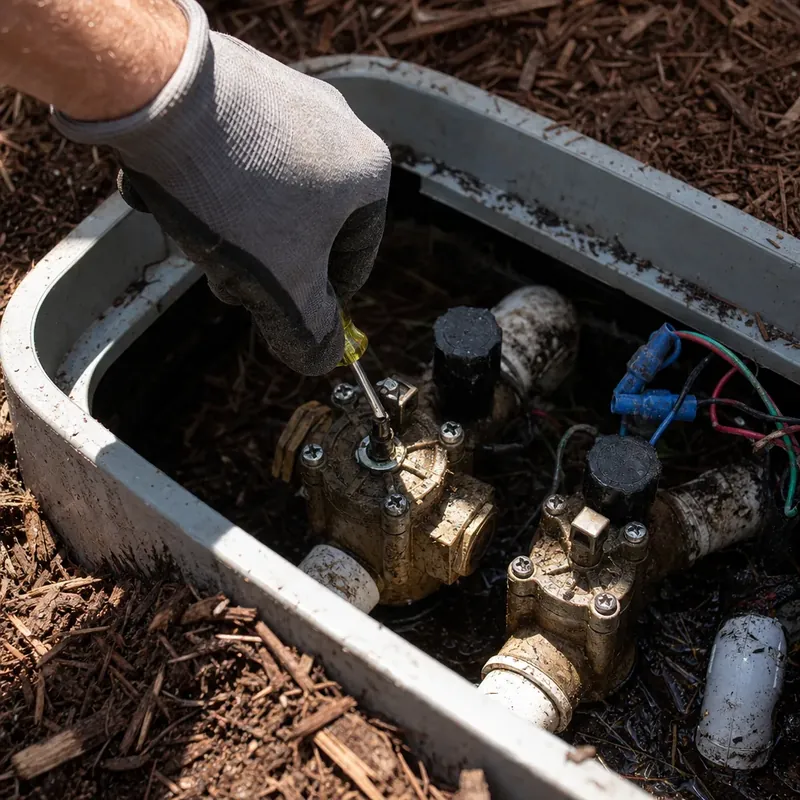
  • A zone that won't turn on or won't shut off. Valves, solenoids and buried wires are easy to damage if you don't know how they connect.
  • A wire break you can't find. Tracing a cut wire through the yard takes testing, not guessing.
  • Pump trouble. A pump that hums, short-cycles or won't prime needs a trained eye.
  • Anything involving the backflow preventer. That device protects your home's drinking water from yard water flowing back in, so it's not a part to experiment with.
  • The same problem keeps coming back. That usually means the real cause hasn't been found yet.

A good rule of thumb is this: if the fix happens above ground and you can undo it, try it. If it means digging, cutting into a line or opening up the wiring, stop there. A small mistake on a buried line can turn a simple repair into a bigger one.

If you do hire someone, ask for their license number before they start. Florida irrigation work should be done by a properly licensed contractor, and a real one won't mind you asking. My Irrigation Guy holds License # SCC131152818, and owner Brian Burke has worked on irrigation systems since 1994.

Skip the Repair Call for These Simple Fixes

Before you pick up the phone, take fifteen minutes and walk your system. Along with the quick fixes we covered above, a few more checks solve a lot of sprinkler trouble, and none of them need a shovel.

  • Run each zone by hand. Most controllers let you start one zone at a time. Turn on zone one, walk out and watch it, then move to the next. You'll quickly see whether the problem is one head, one zone or the whole yard. Jot it down. It's useful even if you end up calling someone.
  • Make sure the water is fully on. If a plumber, pest company or the last owner touched the irrigation shutoff valve, it may be partly closed. A half-open valve gives you weak spray everywhere and looks like a much bigger problem than it is.
  • Look at the clock on your controller. If the time is blinking or wrong, the schedule may be firing at odd hours or not at all. Many controllers keep the time with a small backup battery. If it's dead, replace it, then reset the date, time and watering days.
  • Check for overlapping programs. Many controllers have more than one program, often labeled A, B and C. If two programs start at the same time, two zones run at once and split your water pressure. Stagger the start times so only one zone runs at a time.
  • Check the sensor switch. Some controllers have a switch that tells the system to obey or ignore the rain sensor. If it got bumped, or a sensor wire came loose, the system may skip every watering, or water right through a storm.
  • Clear the turf around a head that barely rises. St. Augustine grass can creep over a head until it can't pop up all the way. Trim the grass back by hand so the head clears the lawn.

While you're at the controller, make sure your watering days still line up with the local watering rules. Those rules can change with the season, and a schedule set years ago may not match them now.

Once you've made a change, let the system run one full cycle on its normal schedule. Check the yard the next morning. Look for dry spots, puddles or a head that didn't come up. If everything looks right and the yard holds up over the next week or so, you've fixed it. No call needed.

If something's still off, stop there. Don't start digging or opening valve boxes to chase it. Use the rule of thumb from above: above-ground and undoable, go ahead. Buried or wired, leave it. Your notes on which zones worked and which didn't are still worth keeping.

If you're new to Florida, or you just bought the house, these checks are also a good way to learn your system. Once you know where the controller, the shutoff and each zone are, the next problem will be a lot less confusing. If you're a seasonal resident, run through this list before you leave town. It's an easy way to make sure the yard gets watered while you're gone.

What a Professional Repair Visit Involves

Close-up of a sprinkler valve being repaired in a valve box

Here's what a repair visit should look like, start to finish, and how we handle our part of it.

It starts before anyone sets foot in your yard. We keep the appointment we set with you, and if we miss your call, we call you back. If you're a property manager, that steady contact matters just as much as the repair itself. You shouldn't have to chase anyone to find out what's going on.

Once we're on site, a good repair visit moves through a few clear steps:

  • Test before touching anything. Each zone gets run and watched, so the repair is based on what the system is doing. Your notes on which zones acted up save time here.
  • Explain what's wrong and what it'll take. You should hear the problem in plain words and get the price before work begins. There's no pressure to say yes on the spot.
  • Make the repair with the right parts. We bring a stocked trailer so we can aim to finish in one visit instead of leaving to hunt for parts and coming back another day.
  • Keep sand out of the lines. When a pipe is opened in our sandy soil, grit can wash inside. A careful repair flushes the line before the heads go back on, so the nozzles don't clog a week later.
  • Run the system again. The fixed zone gets turned on and checked, and so do the zones around it, to make sure the repair didn't move the problem somewhere else.

That last step is the one people skip. A repair isn't done when the new part is in the ground. It's done when the water comes on and every head in that zone rises, sprays where it should and shuts off cleanly.

Before we leave, you get clear next steps. If something else in the system looked worn, we'll tell you about it and let you decide what to do. We won't pad the bill with extra work you didn't agree to.

If you're new to Florida or new to the house, ask us to walk you through the controller while we're there. We'll show you how your system works and how to program it, including setting your days to match the local watering rules. It only takes a few minutes, and it means you won't be guessing the next time a zone acts up.

Seasonal residents and busy owners usually want one thing: a repair that's done right once, so they can stop thinking about it. Our repairs come with a 30-day repair warranty. That gives you a few weeks of normal watering, summer storms and all, to see the fix hold up.

Why Pump Repairs Take More Diagnosis Than Other Fixes

If your sprinklers draw from a well, pond or lake instead of city water, a pump does the work. When that system stops, it's easy to blame the pump. It's the biggest, loudest part, and it's the one people hear about. The pump is only one link in a chain, though, and several other parts can make a healthy pump look dead.

Here's what sits between your controller and water coming out of the heads on a pump system:

  • The controller, which sends the signal to start watering.
  • A pump start relay, a small switch that turns the pump on when a zone opens. If it fails, the pump never gets the message.
  • The wiring and breaker that carry power to the pump.
  • The suction side, the pipe that pulls water up from the well or pond. One small air leak here can stop the pump from holding prime, which means it loses the water it needs to push.
  • A check valve or foot valve that keeps water from draining back down between cycles.
  • The water source itself. A clogged intake screen or a low pond level can starve the pump.

A failure in almost any one of these can look the same from your yard. Nothing runs, or the pump hums and nothing comes out, or it starts and stops over and over. A worn-out pump can cause those things too. So can a ten-dollar part on the wall of your garage.

That's why pump repairs take more testing than a cracked head or a stuck valve. We check that the controller is sending a signal, that the relay is passing it along, that power is reaching the pump and that the pump can pull water from the source. Each step rules something in or out. Only then do we know which part failed.

This matters for your wallet. In this trade, the cost of a pump repair depends mostly on what's broken. Replacing a relay, sealing a suction leak or clearing an intake screen is a much smaller job than pulling and replacing the pump. If a pump gets swapped without testing the rest of the chain, you can pay for the big part and still have the same problem when the real cause is found later. Before anyone recommends a new pump, it's fair to ask what tests showed the old one is done.

Sometimes the answer really is a new pump. Motors wear out, and a pump that's the wrong size for your system can strain for years before it quits. When that's the case, we'll show you why and walk you through your options, including our irrigation pump installation service. You'll get a clear price and plain advice, and the decision stays yours.

If you call about a pump, a few details help us show up ready. Tell us whether it's a well, pond or lake, what the pump does when a zone should be running, and whether anything changed recently, like a storm, a power outage or work near the well. The electrical side isn't a DIY job, so leave the pump box closed and let us test it.

Frequently Asked Questions

Can I legally dig up and fix a cracked pipe myself?

You can handle small above-ground fixes, but a cracked pipe underground is a job for a licensed irrigation contractor. Florida irrigation work involving buried lines, valves, and backflow devices should be done by someone properly licensed, since a bad repair can damage pipes you can't see. Ask for a license number before any work starts.

Why does my sprinkler problem keep coming back after a quick fix?

A repeat problem usually means the real cause was never found. Swapping the part you can see, like a head or a valve, without tracing why it failed often leaves the underlying issue in place. A full test of each zone, the controller, and the wiring is what catches the actual cause instead of just the symptom.

What should I tell you when I call about a sprinkler problem?

Tell us what you're seeing: which zone is acting up, when it started, and whether your water bill has changed. Notes from running each zone by hand are useful too. Those small details help us point to the likely cause before we arrive, so the visit goes faster. If we miss your call, we call you back.

What makes a sprinkler repair cost more or less?

The biggest factors are what failed and how much digging it takes to reach it. A cracked head above ground is a small job. A buried pipe, a stuck valve or a buried wire takes more time and parts. The size of your system matters too, because more zones mean more to test. We may charge a diagnosis fee for repairs during busy months. We explain what we found and give you a written estimate before any work starts.

Why won't my sprinkler head pop up?

The usual causes are grass creeping over the head, dirt or sand packed between the cap and the riser, a cracked or worn head, or low pressure in that zone. A shutoff valve that someone left partly closed can also keep every head in a zone from rising all the way. Trimming the grass back by hand is worth a try. If the head still stays down, the problem is likely underground and worth a visit.

Why won't my sprinkler zone shut off?

A zone that keeps running usually has a valve stuck open. Sand or debris can get caught inside the valve, or a worn part may no longer seal. Turn the zone off at the controller, and if the water keeps running, shut off the irrigation supply until it's fixed so you don't waste water or flood the bed. A stuck valve is a job for a licensed repair.

Is there a warranty on sprinkler repairs?

Yes. Repairs come with a 100% satisfaction guarantee and a 30-day limited warranty on parts and workmanship. If a repair fails within 30 days because of faulty parts or workmanship, we fix it for free. The warranty does not cover damage caused by someone else, such as a lawn crew.

Ready to Get Your Sprinkler System Repaired?

Call 386-610-2882 or send us a message. We reply within 48 business hours to schedule your visit.

About Us

We diagnose, repair, and install irrigation systems and sprinkler systems in Ormond Beach, Daytona Beach, Port Orange, Flagler Beach and Palm Coast. License # SCC131152818

2500 John Anderson Dr
Ormond Beach FL 32176

Follow Us

Guarantees

  • On-Time Guarantee
  • Drug Free Guarantee
  • 100% Satisfaction Guarantee
  • 30 Day Limited Warranty on repairs and new installs and new installs and new installs and new installs

Payment

  • We gladly accept:
  • Most Major Credit Cards
  • Zelle or Wire Transfer
  • Check
  • Cash
Call NowGet Service Now