Sprinkler System Maintenance in Ormond Beach

Small leaks, clogged heads and coverage gaps stay hidden until the heat arrives, then show up as brown patches and a higher water bill. A maintenance visit checks every zone, head, valve and timer setting so we catch problems early. We keep the appointment and explain what we find in plain words. Licensed (SCC131152818), family-owned since 1994, and rated 4.9 stars from 180+ Google reviews. Serving Ormond Beach, Daytona Beach, Port Orange, Flagler Beach, Palm Coast and the towns in between.

What a Maintenance Visit Checks, Start to Finish

A real Sprinkler System Maintenance visit runs every zone and looks at the whole system, from the timer on the wall to the last head at the edge of the yard. The goal is to catch small problems, like a clogged nozzle or a slow leak, before they waste water or leave dry spots. You should finish the visit knowing what's working, what isn't, and what a fix would take.
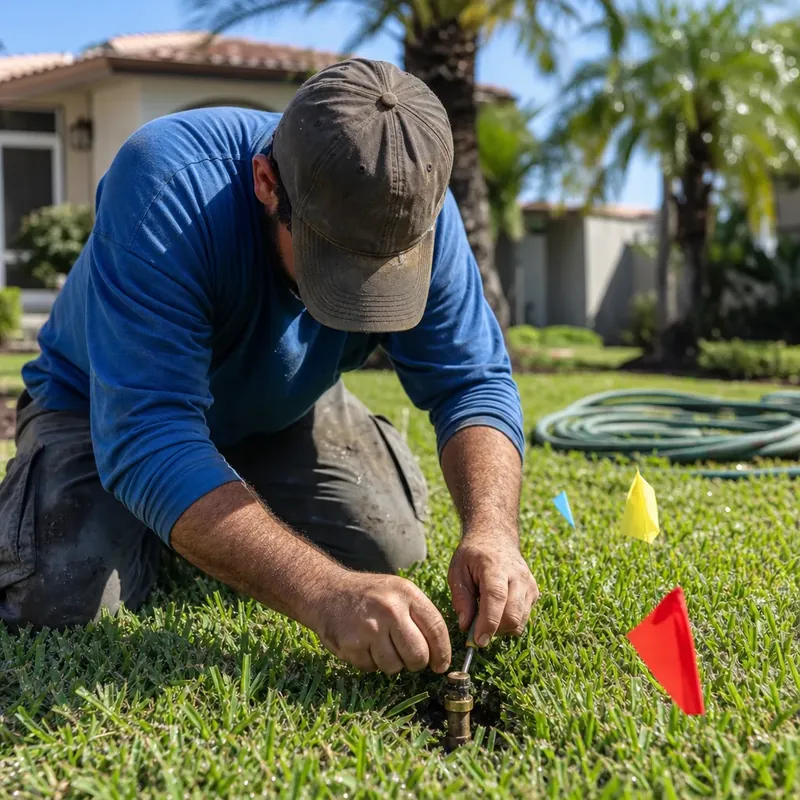
Technician adjusting a rotor sprinkler head during maintenance

If you've never watched someone check a sprinkler system, it can feel like a mystery. It shouldn't be. A good check follows a simple path. It starts at the controller and works out to the yard, so nothing gets skipped.

  • The controller. This is the timer that tells each zone when to run and for how long. The check covers the clock, the start times, the run times, and the backup battery. A dead battery can wipe your schedule after a power blip from a summer storm.
  • Every zone, one at a time. Each zone gets turned on by hand while someone walks it. That's the only way to see what's really happening out there, instead of guessing from the garage.
  • Each sprinkler head. Heads get checked for clogs, cracks, and tilting. A pop-up that doesn't rise, or one that's been clipped by a mower, gets flagged. Grass and sand creep in around heads over time, and a head that's sunk low can't spray over the lawn.
  • Spray pattern and coverage. Water should land on plants, not on the driveway, the sidewalk, or the side of your house. Heads that overspray waste water. Gaps between heads leave brown patches.
  • Valves. These open and close each zone. A valve that sticks open can keep a zone running long after it should've shut off. One that won't open leaves a whole section dry.
  • Leaks and pressure. Soggy spots, puddles that never dry, or heads that barely spit water can point to a broken line or a pressure problem underground.
  • Rain sensor. If you have one, it should stop the system when it rains. If it's stuck, you're watering right after a downpour.
  • The pump, if your system has one. Some systems pull from a well or pond. A pump that cycles on and off or sounds rough is worth a closer look.

Ormond Beach soil is mostly sand, and sand drains fast. Water that would soak in slowly in clay can run right past the roots here. So run times aren't one-size-fits-all. We adjust zones for sandy Florida soil, so sunny turf and shady beds each get what they need without extra runoff. It's one of the simplest ways to cut waste and lower your water bill, and it helps you stay inside local watering rules.

It's frustrating when a contractor pokes around, says "you need a lot of work," and leaves you guessing. That's not how we do it. We'll look at the whole system, explain what we find in plain words, and give you a clear price with no pressure. If you're new to Florida or new to the house, we'll walk you through how your system works and how to program it, so you're not stuck staring at the timer later.

For busy and seasonal folks, the goal is one visit. Our trailer is stocked, so common parts like heads and nozzles are on hand. When we're done, you get clear next steps, not a vague promise to get back to you.
Maintenance vs. Repair: Knowing the Difference

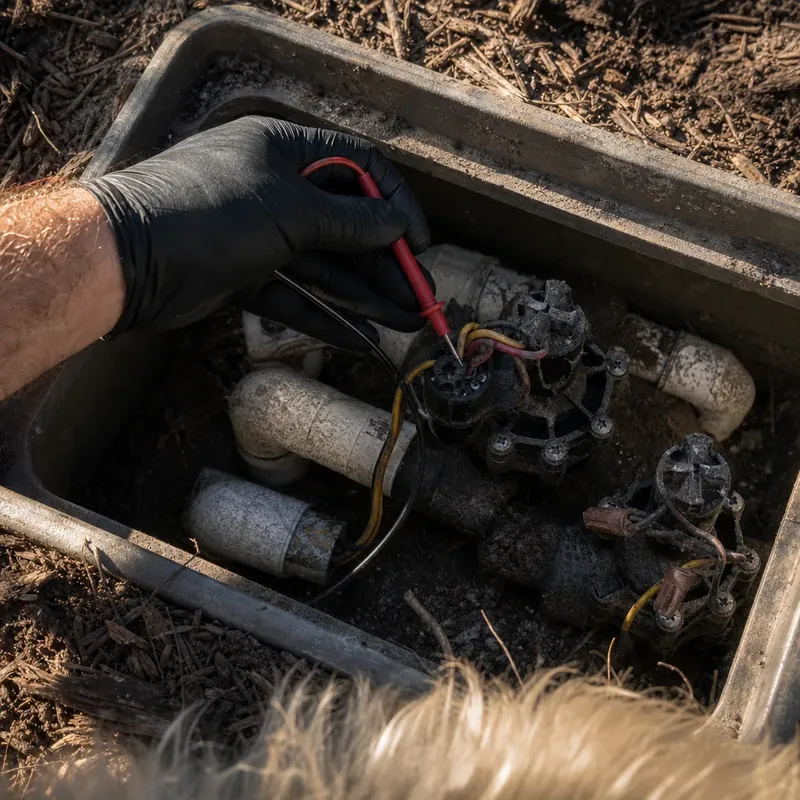
Testing sprinkler valve wiring during a maintenance visit

Maintenance keeps a working system working. Repair fixes something that's already broken. That's the whole difference, and it matters because it changes what you're calling about and what you should expect to pay for.

Think of maintenance like a check-up. Nothing has to be wrong. We're cleaning a clogged nozzle, raising a head that's sunk into the sand, re-aiming spray off the driveway, and setting run times so your zones match the season. These are small adjustments that keep water going where it should.

Repair is when a part has failed and adjusting it won't help. Here are some signs you're probably looking at a repair, not a tune-up:

  • A wet spot in the yard that stays soggy even on days the system doesn't run.
  • A zone that won't turn on at all, or one that won't shut off.
  • Water bubbling up from the ground instead of spraying from a head.
  • Several zones acting up at once, which can point to a wiring problem.
  • A pump that clicks on and off or won't build pressure.

Each of those has its own fix. A cracked pipe underground calls for sprinkler line and pipe repair. A stuck zone often means sprinkler valve replacement. Dead zones across the yard can come from sprinkler system wire breaks, and a struggling pump needs irrigation pump repair. We cover each of those on its own page, so we won't go deep on them here.

Here's the part folks worry about most. What if you book maintenance and we find a repair? It's a common worry when a contractor shows up for one thing and hands you a list of surprise add-ons. That's not how My Irrigation Guy works. If we find something broken, we'll show you, explain it in plain words, and give you a clear price. You decide what happens next. There's no pressure to fix it that day.

When it's a quick fix, like a cracked head or a broken nozzle, we can usually take care of it on the spot because our trailer is stocked with common parts. That saves you a second visit, which helps if you're only in town part of the year or you're managing a property from a distance. Our repairs come with a 30-day repair warranty.

Some things you don't need us for at all. If a head got knocked crooked by the mower, you can often twist it back by hand. If grass has grown over a head, you can trim it back. If your timer lost its schedule after a storm, swapping the backup battery and re-entering your times may be all it needs. Try those first. If the problem keeps coming back, that's a sign something deeper is going on.

The simple rule: if your system runs but doesn't run well, start with maintenance. If something won't run, won't stop, or leaks when it's off, you're likely looking at a repair.

Why Florida's Year-Round Watering Changes the Maintenance Schedule

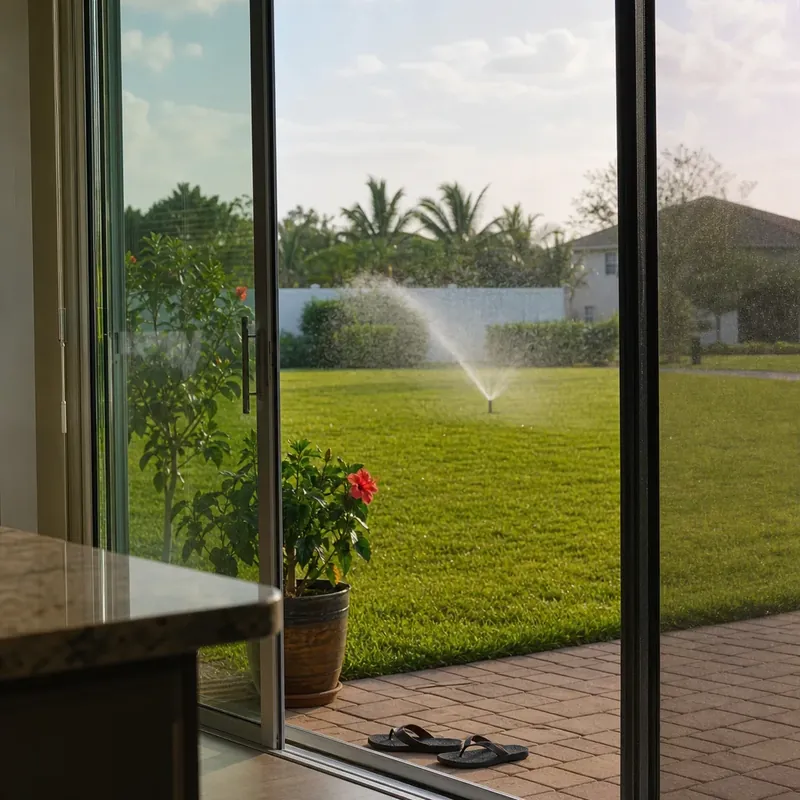
Backyard sprinklers watering a lawn at an Ormond Beach home

If you moved here from up north, you might remember sprinklers shutting off for winter. Someone came out in the fall to drain the lines and came back in the spring to turn everything on. Those two visits caught a lot of problems without anyone planning it that way.

Florida doesn't give you that break. In Ormond Beach, your system can run in January just like it does in July. It never gets an off-season, so nothing forces a check. A head that tilted in March can spray the driveway until August if nobody's looking. Small wear adds up quietly because the system just keeps running.

That's why maintenance here works best when it follows the seasons, not the calendar up north.

Our year has two big swings, and each one asks something different of your system.

  • The dry months. Late fall through spring tends to bring less rain. Your lawn leans on the sprinklers more, so gaps in coverage show up fast as brown patches. Spring can be the toughest stretch because it's warm and dry before the summer rains start.
  • The rainy season. Summer brings afternoon storms that can soak the yard almost every day. Your system should water less, not more. This is when a stuck rain sensor or an old schedule wastes the most water. The storms that knock out power can also wipe your timer if the backup battery is dead.
  • Cooler stretches. Grass grows slower when it's cooler, so it needs less water. Run times that made sense in August are often too long in December.

Because our soil is so sandy, those swings matter even more. Water moves through fast, so a schedule that's off by a season either leaves turf thirsty or sends water past the roots. Local watering rules also set which days and times you can run your system, so your timer needs to stay in step with them as the seasons change.

For a lot of homes, two points in the year make natural checkpoints. One is before the dry season, so coverage is solid when your lawn needs it most. The other is before the summer rains, so run times come down and the rain sensor is ready. If your yard has trouble spots or heavy foot traffic, you may want to check more often. If a smart controller or rain sensor would take some of the guesswork off your plate, we also do smart sprinkler system installation and rain sensor installation.

This matters most if you're only here part of the year. When you head north for the summer, your system runs through the rainiest months with nobody watching it. A check before you leave helps make sure it's set for the weather you won't be here to see. It also gives you clear next steps if something needs work while you're away. Property managers get the same benefit. A seasonal check means fewer surprise calls from tenants and a clear record of what was done.

Waiting on a contractor is frustrating. We show up when we say we will, and if we miss your call, we call you back.

Early Warning Signs a System Needs Attention

Most sprinkler systems give you hints long before anything breaks. You don't need tools to spot them. A slow walk around the yard while a zone runs, or a quick look at your water bill, tells you a lot. Here's what to watch for.

  • Your water bill creeps up and nothing else has changed. That can point to a slow leak, or to summer run times that never got cut back when the weather cooled.
  • Brown patches keep showing up in the same spots. Dry circles or strips that come back again and again usually mean a coverage gap, often from a clogged nozzle or a head that's been blocked.
  • A soggy green strip sits right next to a dry one. One head may be pouring water on a small area while the spot beside it gets almost nothing.
  • Heads make a fine mist or fog instead of drops. That usually means the pressure is too high. Mist drifts off in the breeze and much of it never reaches your grass.
  • Orange or brown stains appear on your walls, driveway, or fence. Iron in well water leaves rusty marks wherever it lands. If you see them, a head is spraying something hard instead of your lawn.
  • Shrubs or plants have grown into the spray. Florida landscaping grows fast. A hedge that was fine two years ago can block a head completely today.
  • You hear hissing, gurgling, or sputtering when a zone starts up. That can mean air in the line or a small leak somewhere along it.
  • The sidewalk is wet every morning. Water on pavement is water you paid for that's running into the street.

One of these by itself is often a small thing. A blocked head might only need a plant trimmed back. A sprayed wall might only need a head turned a little. Try the easy fix first and see if it holds.

It's worth having the whole system checked when you notice several signs at once, or when a problem comes right back after you've adjusted it. That usually means something deeper is going on, like pressure across the system or a leak you can't see. If you can't tell whether it's a tune-up or a broken part, the maintenance vs. repair breakdown above can help you sort it out.

If you're new to the house or new to Florida, you might not know what normal looks like yet. That's okay. A first check gives you a baseline, so you'll know what each zone should look like when it's running right. We'll walk you through it so the next brown patch doesn't feel like a mystery.

If you're only here part of the year, you can't do the morning walk. Two simple things help. Keep an eye on your water bill online while you're away, and ask a neighbor to let you know if they see puddles or brown spots. A sudden jump in the bill is often the first clue that something needs a look.

Catching these signs early keeps the fix small. A clogged nozzle found this month is a quick adjustment. Left alone through a dry spring, the same nozzle means a thirsty lawn and a higher bill. Your sprinklers should save water, not waste it, and these little clues are how they tell you it's time for a look.

When a System Doesn't Need a Full Maintenance Visit

Not every system needs a full check right now. Sometimes the honest answer is to wait, handle it yourself, or call about one specific problem instead. Here's when we'd tell you to hold off.

Your system was just installed or just checked. If a new system went in a few months ago, or the whole system was gone over last season and nothing has changed since, you probably don't need another full visit yet. Give it time to show you how it's doing. Come back to it when the seasons turn or when one of the warning signs above starts showing up.

You already know what's wrong. If one zone won't shut off or there's a puddle that never dries, you don't need someone to test every head in the yard to find it. You need that one thing fixed. Ask for the repair by name, like a valve, a line, or a leak, and skip the full tune-up. It keeps the visit focused and the bill smaller.

You're about to redo the yard or replace the system. If you're tearing out turf for beds, putting in a pool, or the system is old and you're already planning to swap it out, a full tune-up on pipes and heads you'll be pulling up soon doesn't make much sense. A conversation about custom irrigation design or sprinkler system upgrades fits that moment better. Then the new layout gets set up right from day one.

Your HOA or landlord handles irrigation. In many Florida communities, the association runs the sprinklers on common areas, and sometimes on each home's lawn too. Renters are often covered by the landlord. Check your HOA rules or your lease before you book anything. You shouldn't pay for work that someone else is already responsible for.

You're comfortable doing your own walk-through. Plenty of homeowners keep their systems in good shape on their own. If that's you, here's a simple routine that covers a lot:

  • Once a month, run each zone for a few minutes using the manual setting on your controller.
  • Walk the zone while it runs and look for heads that don't pop up, spray the pavement, or just bubble.
  • Trim back any grass or shrubs crowding the heads.
  • Check that your run times still fit the season, and cut them back when the summer rains start.
  • Glance at your water bill each month for any jump you can't explain.

If everything looks right, you're done. The easy fixes we covered earlier, like turning a knocked head back into place or resetting the timer after a storm, are fair game too.

So when does a full check make sense? When you can't tell what's normal for your system, when you're leaving town for months, when several small problems pile up at once, or when a fix you made by hand doesn't hold. Outside of those, it's fine to keep watching and wait.

Frequently Asked Questions

Can you fix problems during a maintenance visit, or do I need a second appointment?

Quick fixes like a cracked head or a broken nozzle can usually be handled on the spot, because our trailer is stocked with common parts. The goal is one visit, which helps if you're busy or only in town part of the year. If we find something bigger, like a buried leak or a bad valve, we explain it in plain words and schedule the repair with you.

Can I convert my spray heads to drip irrigation myself?

You can, but it's worth understanding what you're changing first. A spray-to-drip conversion swaps a head that sprays a wide area for tubing that drips water right at the base of a plant. This can save water in garden beds, but it changes how that zone's run time should be set, since drip systems water more slowly than spray heads. If you're not sure how the new setup affects your schedule, a maintenance check can confirm the zone is still balanced with the rest of your system.

Why do my sprinkler heads near the driveway keep breaking?

Heads near driveways break most often because they get hit by mower wheels, car tires, or foot traffic right at the edge of the pavement. Over time, that repeated impact can crack the riser or the fitting underneath it, not just the visible head. If the same head near your driveway keeps failing, the issue may be the fitting below ground, which a visual check alone won't catch. Pointing it out during a maintenance visit lets us check what's really going on beneath the surface.

How often should a sprinkler system be serviced in Florida?

For a lot of homes, twice a year works well: once before the dry season so coverage is solid when your lawn needs it most, and once before the summer rains so run times come down and the rain sensor is ready. Florida systems run all year, so nothing forces a check the way a northern winter shutdown does. A system with a history of problems may do better with more frequent visits.

Can sprinkler maintenance lower my water bill?

It often can. During a maintenance visit we reset run times for the season, check that the rain sensor works, re-aim heads that spray the driveway or sidewalk, clear clogged nozzles and look for slow leaks. Water that lands on pavement or runs past the roots is water you paid for and your lawn didn't use.

Do I need maintenance if my sprinklers seem to work fine?

Nothing has to be wrong. Maintenance works like a check-up. A head that tilted in March can spray the driveway until August if nobody looks, and a sunken head or a clogged nozzle makes dry patches long before anything stops working. A visit catches those small problems before they turn into brown grass or a bigger repair.

Should I change my sprinkler schedule between the dry and rainy seasons?

Yes. Late fall through spring is usually drier, so your lawn leans on the sprinklers more. Summer storms can soak the yard almost daily, so your system should water less. A schedule that's off by a season either leaves turf thirsty or sends water past the roots in our sandy soil. Also check that your watering days match your local watering rules.

Ready to Schedule Your Sprinkler Maintenance?

Call 386-610-2882 or send us a message. We reply within 48 business hours to schedule your visit.

About Us

We diagnose, repair, and install irrigation systems and sprinkler systems in Ormond Beach, Daytona Beach, Port Orange, Flagler Beach and Palm Coast. License # SCC131152818

2500 John Anderson Dr
Ormond Beach FL 32176

Follow Us

Guarantees

  • On-Time Guarantee
  • Drug Free Guarantee
  • 100% Satisfaction Guarantee
  • 30 Day Limited Warranty on repairs and new installs and new installs and new installs and new installs

Payment

  • We gladly accept:
  • Most Major Credit Cards
  • Zelle or Wire Transfer
  • Check
  • Cash
Call NowGet Service Now